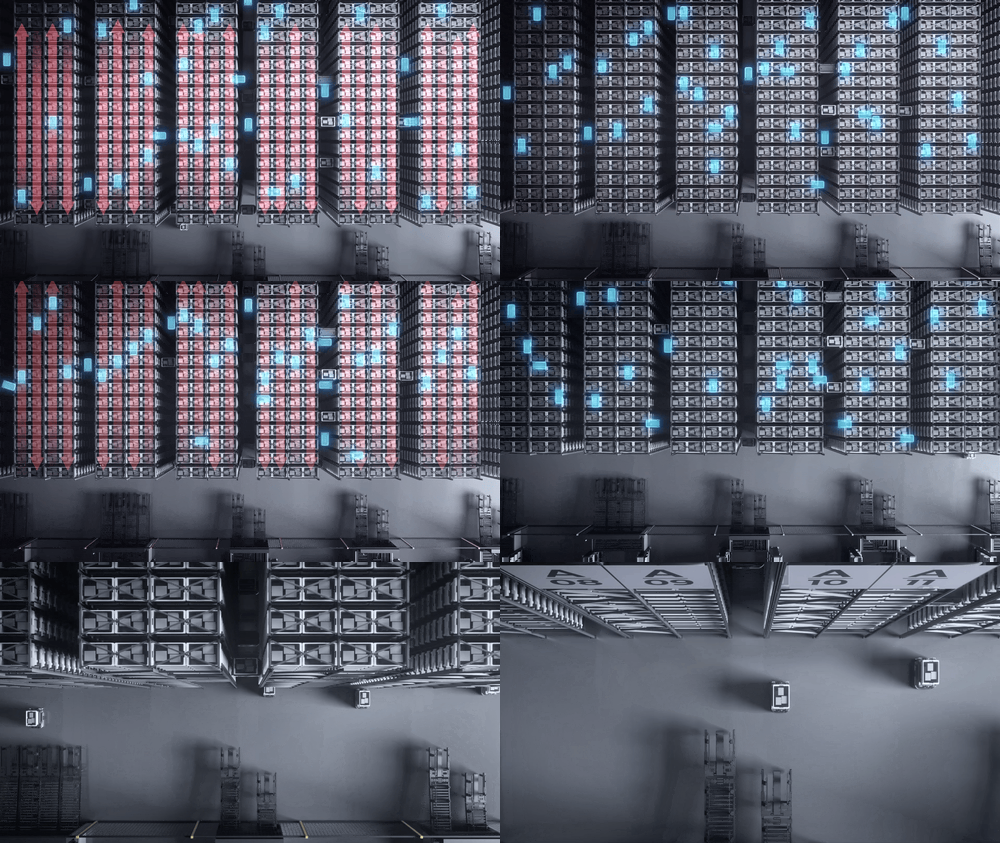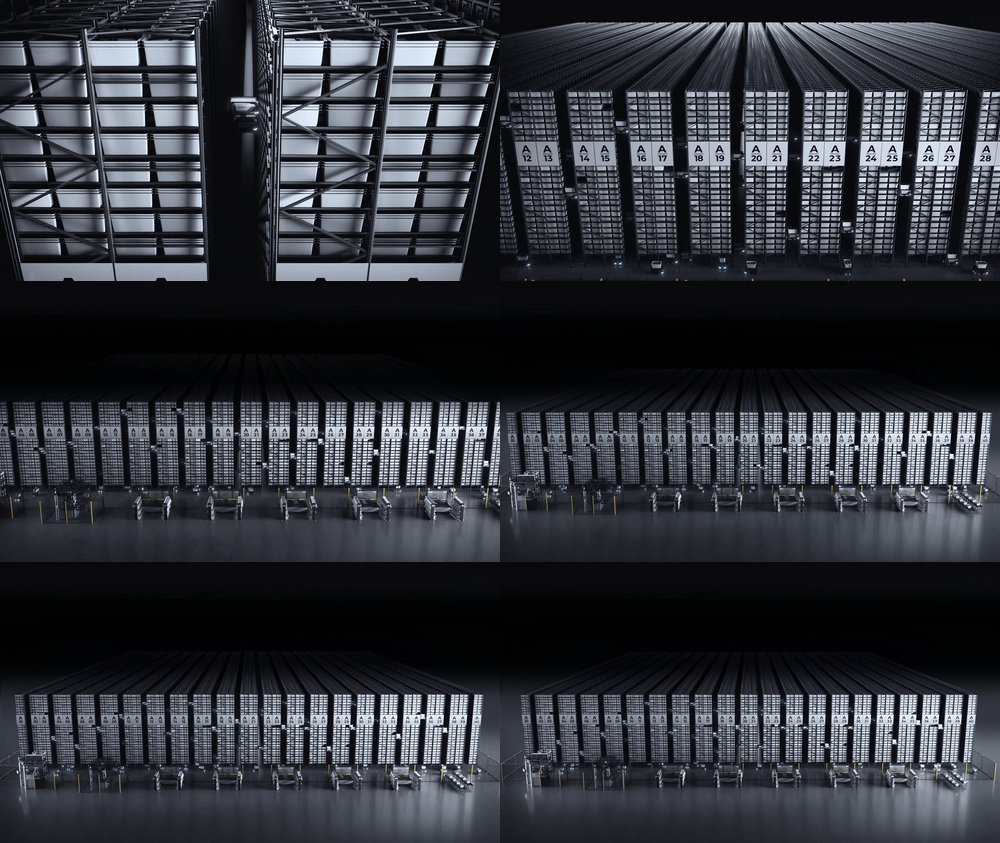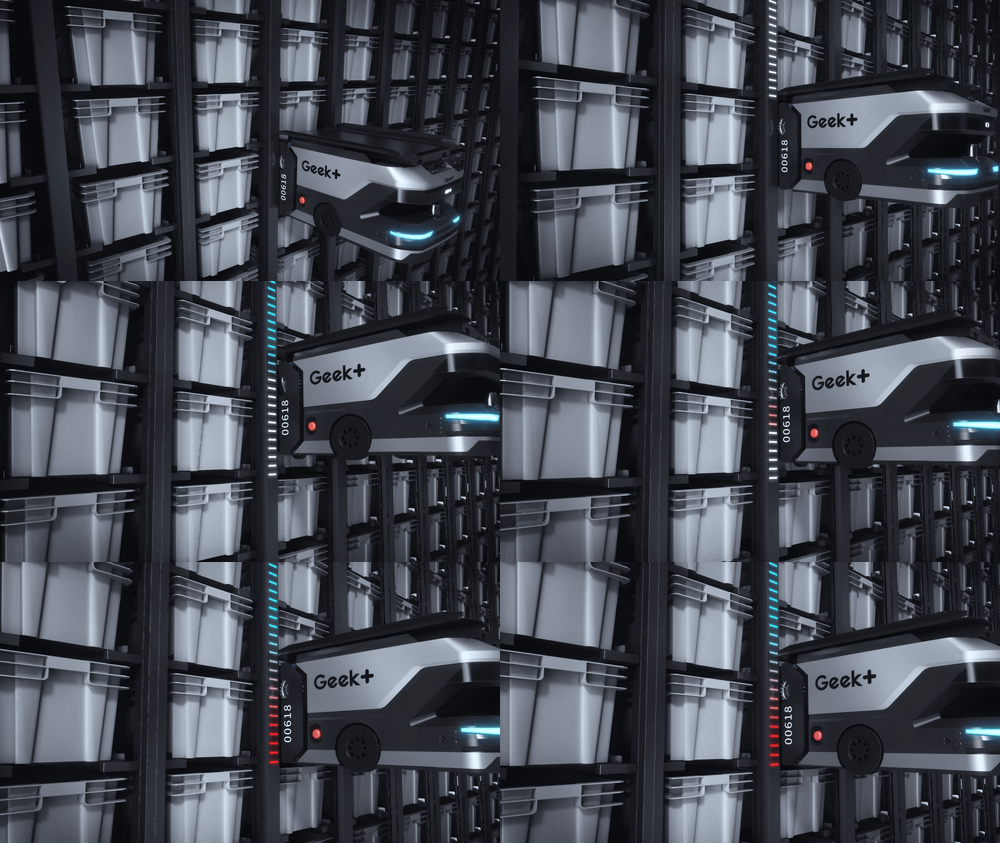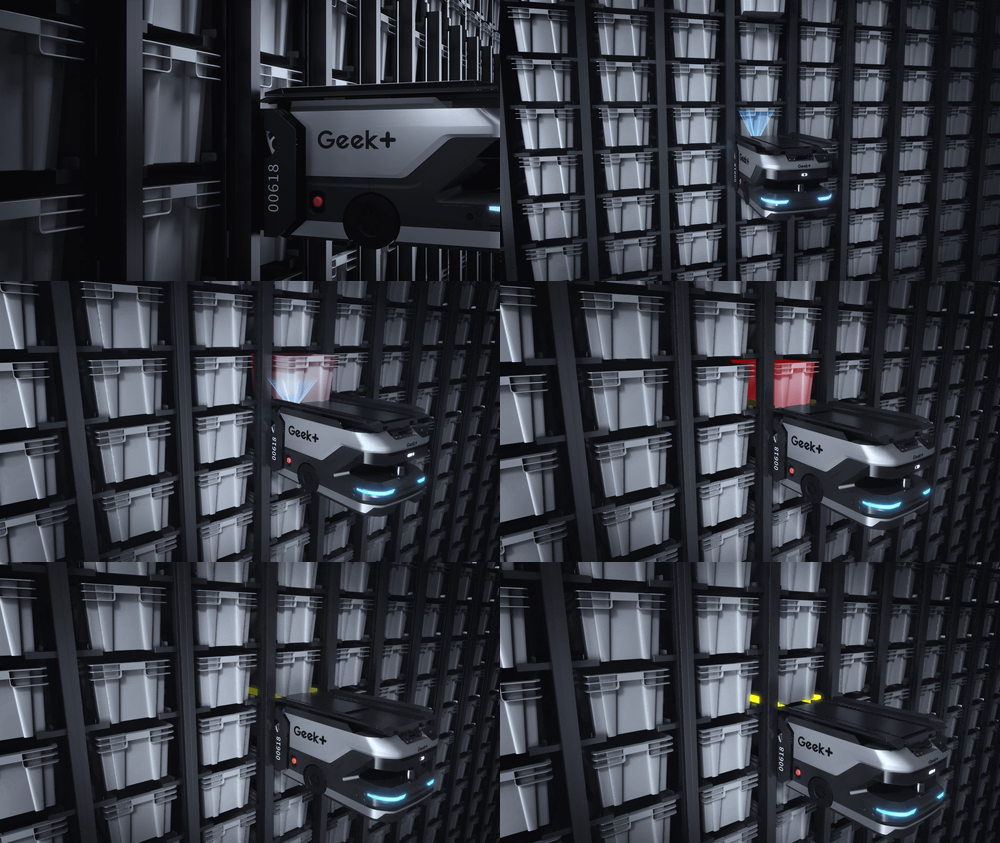
HYPER THROUGHPUTMove more through the same footprint.
RS Hyper reaches up to 6,000 totes/hour per 1,000 m² at max configuration, turning the same operating footprint into substantially more peak flow.
Born for Performance. Engineered for Throughput.
More of your warehouse working at the same time.
RS Hyper system moves up to 6,000 totes/hr through a 1,000 m² 10.8k ft² cell, and feeds up to 800 totes/hr at a single workstation, using climbing robots to serve storage and retrieval up to 15 m 49 ft ↑
Same footprint. More throughput.
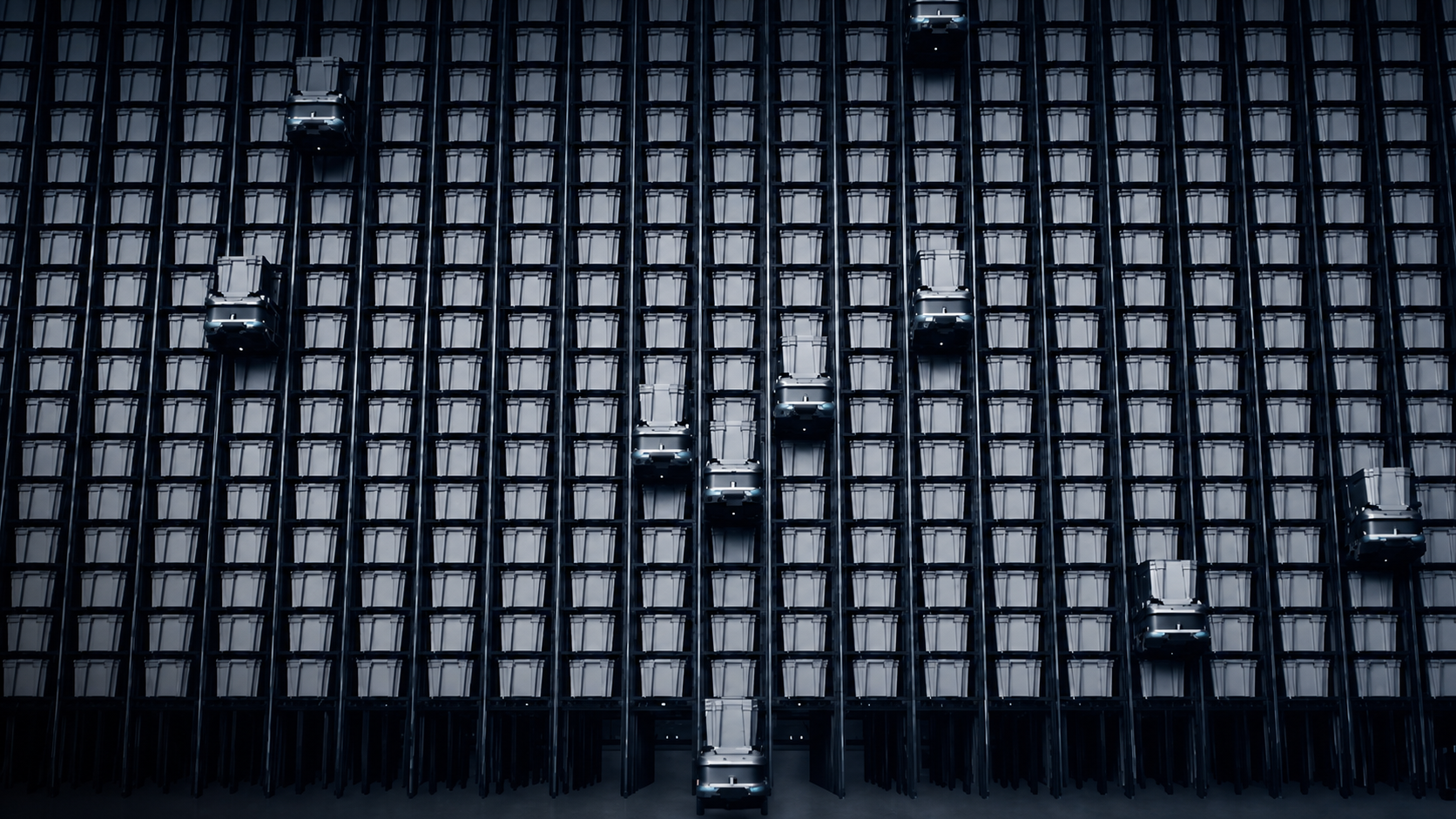
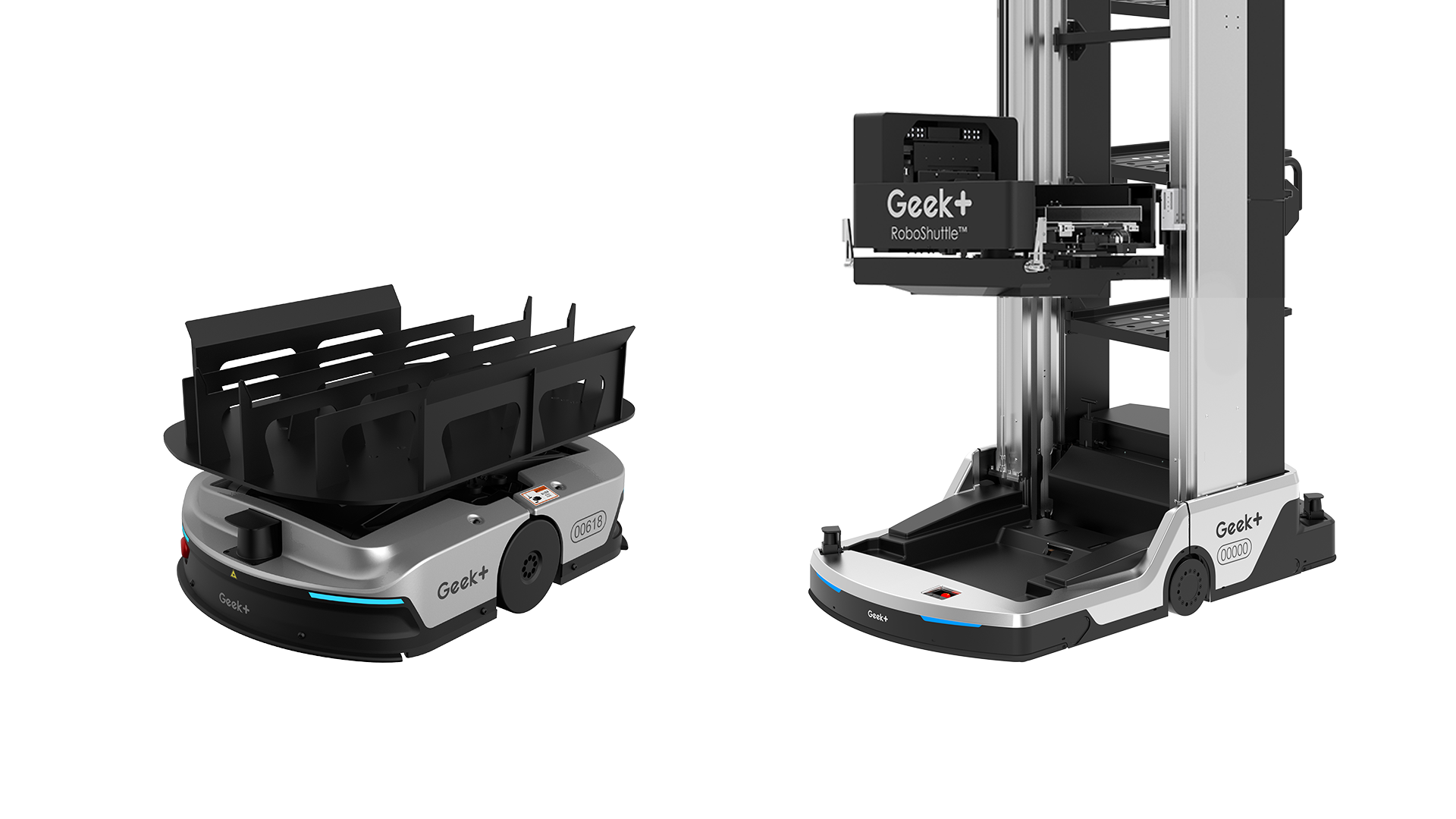
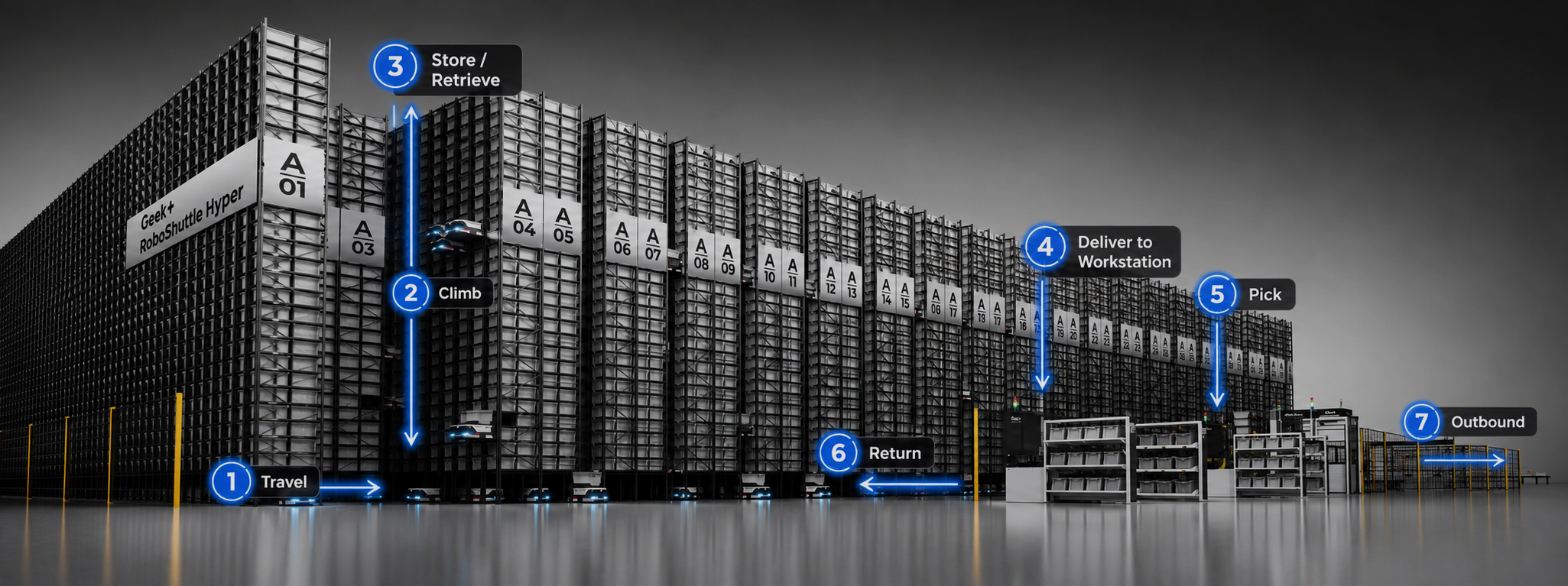
RS Hyper is a high-throughput tote-to-person system where climbing robots retrieve totes directly from dense high-bay storage and deliver them to picking workstations.
Dense high-bay tote storage.
Direct high-speed tote retrieval.
Coordinated movement through dense paths.
Continuous tote supply to workstations.
Human or automated item picking.
Extend dual-deep storage vertically and horizontally as inventory grows.
Increase retrieval and tote-delivery capacity on the same system architecture.
Add workstation configurations as order-processing demand grows, with Workstation Max up to 800 totes/hour.
Extend item picking with Geek+ Robot Arm Picking Station or Geek+ Warehouse Humanoid GINO.
As more robots, totes and workstation demand move through the same footprint, performance depends on eliminating constraints across flow, infrastructure and control.
High-density storage only pays off if totes can move fast enough. Climb, travel, positioning and handoff all add time to every move.
If totes don't reach the workstation fast enough, operators wait and picking output drops.
More climbing hardware means more installation, alignment and maintenance complexity across the rack.
As fleets grow, limited paths and poor balancing create congestion, detours and idle robots instead of more output.
Adding robots only raises output if they can climb and move at the same time without blocking one another.
Higher speeds and denser traffic leave less margin for positioning errors, unstable totes or unsafe human access.
Throughput first. Density with Access. Complete flow. Performance comes from the whole system, not just robot speed.
*Performance comparisons based on Geek+ internal testing against representative industry benchmark configurations.
Fourteen engineering decisions. Four questions Hyper answers for your business.
RS Hyper reaches up to 6,000 totes/hour per 1,000 m² at max configuration, turning the same operating footprint into substantially more peak flow.
Climbing, travel, acceleration and millimeter-level stop precision are tuned together to shorten tote cycles. Single-robot efficiency reaches up to 22 totes/hour, with outbound response as low as 1.5 minutes.
A 1:10 charge-to-run ratio plus opportunity charging during tote handoffs and station switches keeps more of each robot's day productive.
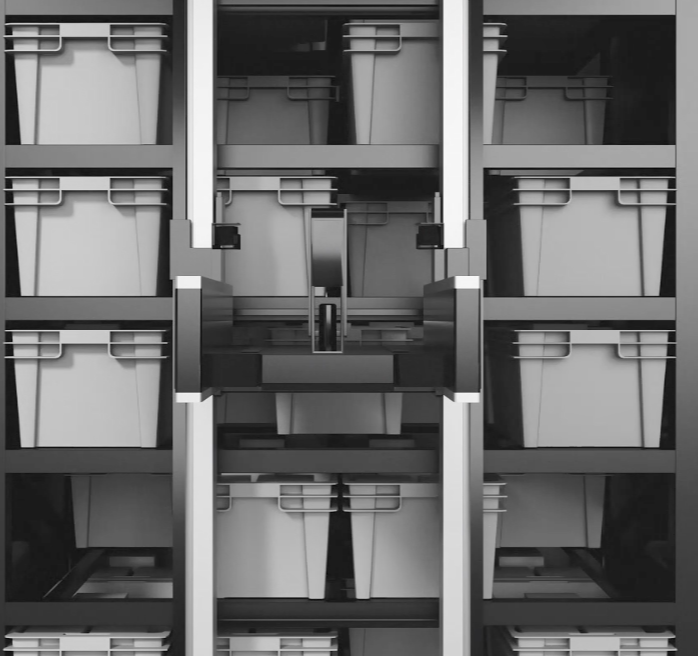
Dual-deep storage, 780 mm aisles and racks up to 15 m turn vertical volume into usable capacity while supporting 600×400 and 650×450 load formats.
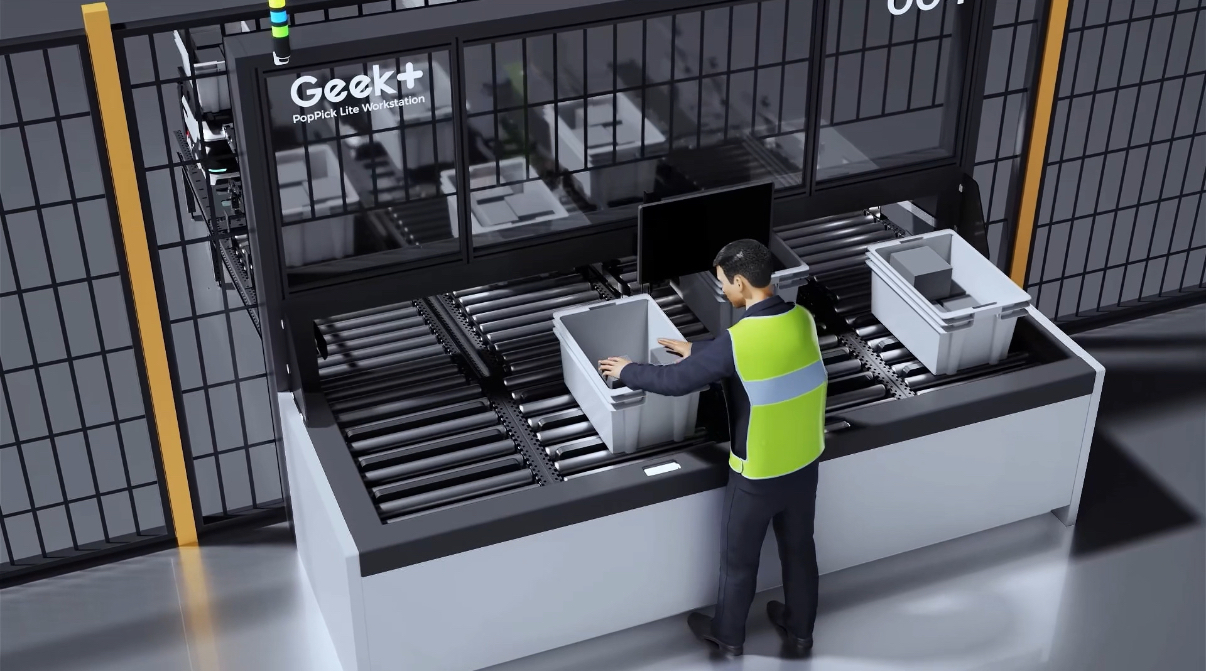
Workstation Max can present up to 800 totes/hour. A buffer of at least five totes lets the conveyor absorb queuing so robots can drop and leave for the next task.
Multiple robots can climb side by side in parallel, keeping more of the fleet productive at the same time.
Two robot aisles beneath the rack and a 30%+ denser path network give RMS more path resources for shorter routes, better traffic balancing and higher fault tolerance.
Dual-deep storage with dual-path, bidirectional tote access supports retrieval from both sides and access to inner storage positions.
AI-driven RMS scheduling coordinates traffic and workload across large fleets, with scheduling performance 20%+ above industry and aisle balancing designed to sustain peak flow.
Hyper is designed for thousand-robot-scale scheduling, keeping route planning, workload distribution and system robustness coordinated as the operation grows.
The single-side rail architecture lowers sensitivity to floor flatness and rack-installation precision, reducing infrastructure dependencies during deployment.
An integrated column-and-rail design is less prone to deformation, helping maintain precise positioning and operational stability over the long term without adding extra burden to the rack.
Anti-protrusion detection automatically corrects tote position, while smart homing, physical rack limit stops and upward/downward sensing help prevent unintended displacement.
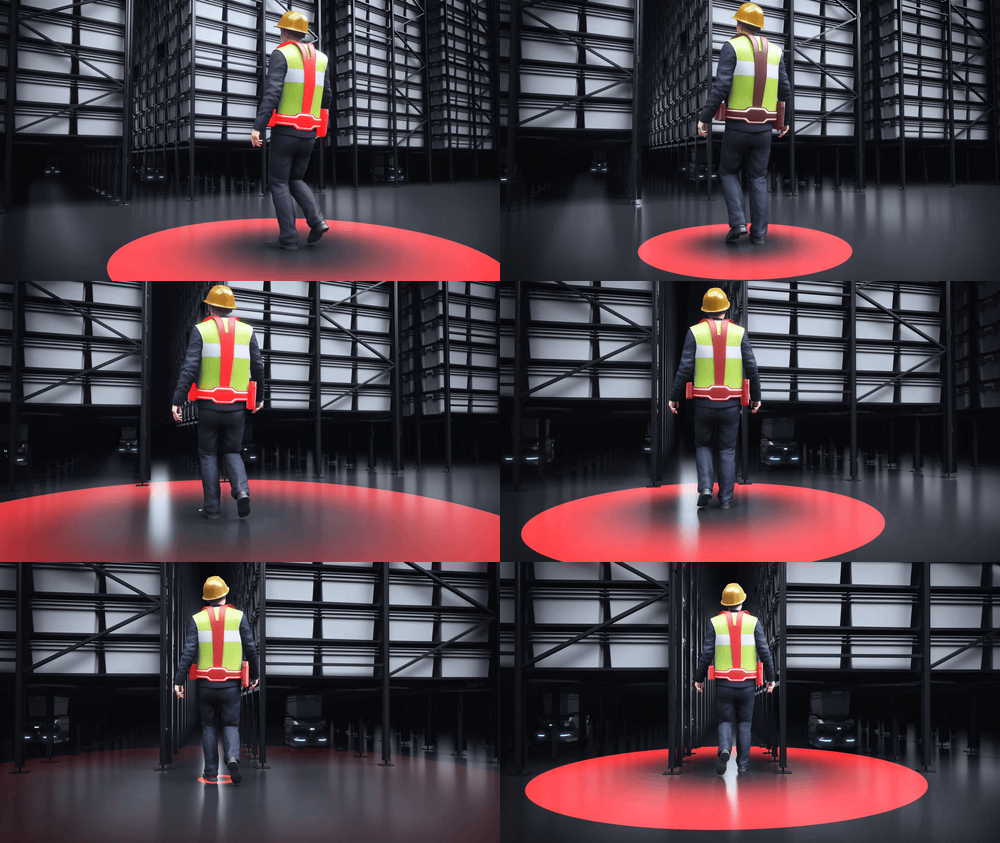
Physical interlock and multi-layer fall protection control drop distance to ≤50 mm, while RoboSafe and Safety Suit compatibility support safer personnel access.
Geek+ one-stop software brings RMS, WES and IOP together in one operational stack, coordinating as many as 5,000 robots, workstations and material flow on one map and one control layer.
%202.gif)
Massive robot orchestration, traffic control and task allocation across the full system.
Coordinates tote flow, workstation activity and order execution from release through fulfillment.
Live monitoring, alerts and performance insight in one interface for faster decisions and steadier operations.
RS Hyper connects putaway, high-density storage, tote movement and picking in one coordinated flow, supporting human picking today and higher levels of automation as needed.

Totes are presented directly to operators for fast, accurate goods-to-person picking using familiar workflows.

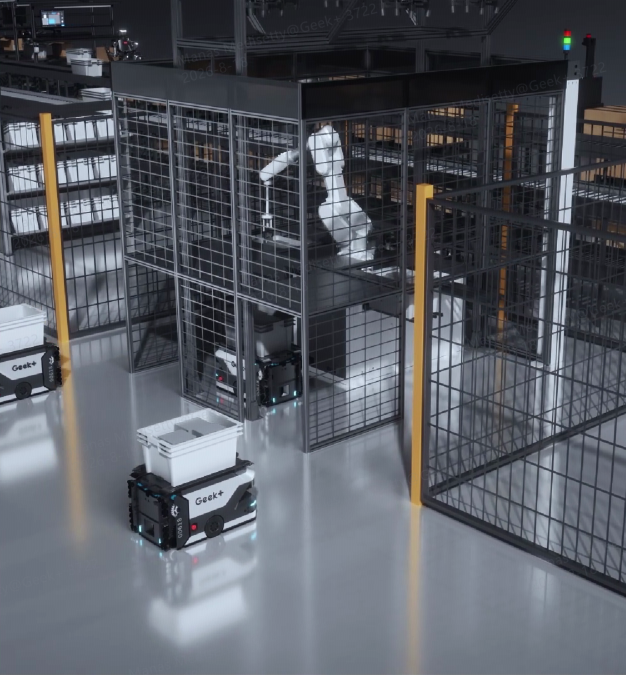
Robot arms pick items directly from presented totes for consistent, automated item-level execution.

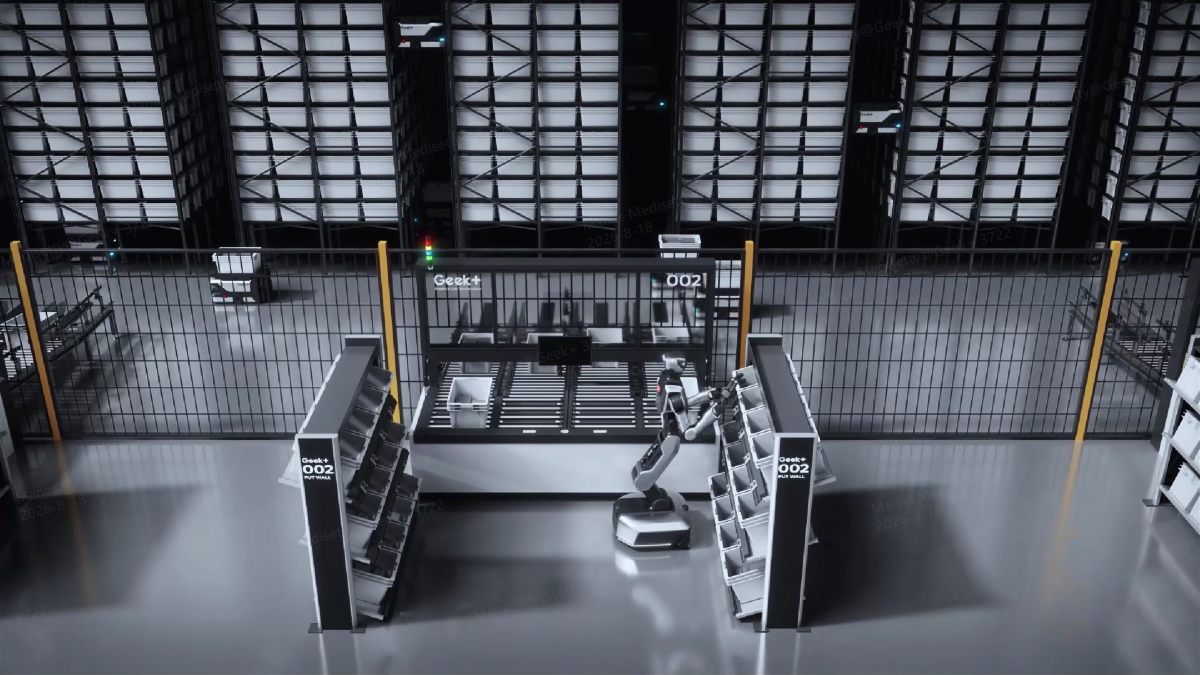
Humanoids can pick from presented totes where more adaptive reach, dexterity and flexibility are needed.
RS Hyper is strongest where dense SKU storage, constrained footprint and peak-hour flow all have to work together.
Push high order velocity through a compact footprint with dense inventory and rapid tote presentation.
Move high-volume centralized inventory quickly to stores, hubs or downstream facilities without expanding the automation footprint.
Keep large long-tail assortments immediately accessible for urgent orders, service commitments and unpredictable demand.
Keep size, color and style assortments accessible while absorbing launches, promotions and seasonal peaks.
Handle changing SKU mixes, customer profiles and peak patterns on one high-throughput tote-to-person platform.
Support peak-heavy order flow, fast replenishment and high workstation output across online and store-fulfillment demand.
Core planning parameters for RoboShuttle Hyper. Final system performance depends on layout, order profile, workstation configuration and application requirements.
Different architectures for different warehouse needs.
Two-axis rack traversal for stable, fixed-cadence, low-SKU tote flow.
Maximum throughput and density in a compact footprint.
Decoupled AMRs for large SKU ranges, mixed storage and variable demand.
Share your footprint, SKU profile and peak-hour targets, the team can review fit and follow up with the right next step.
Nov 3, 2026 meet the team and see RS Hyper in person.
Book a live in-person demoRS Hyper is a high-throughput tote-to-person system where climbing robots retrieve totes directly from dense high-bay storage and deliver them to picking workstations.
A 1,000 m² / 10.8k ft² RS Hyper cell can move up to 6,000 totes per hour, while a single workstation can receive up to 800 totes per hour, depending on system configuration and operating conditions.
RS Hyper supports rack heights up to 15 m / 50 ft and can accommodate 50,000+ totes per 1,000 m² in high-density configurations.
The system can scale by adding storage capacity, robots, workstations and picking automation on the same architecture. Geek+ RMS can orchestrate up to 5,000 robots for large-scale deployments.
RS Hyper is designed for operations that need both high storage density and very high tote throughput, especially where peak order volumes, limited floor space and workstation flow are major constraints. Key industries: 3PL, Apparel, Retail, Spare Parts, MFCs, Ecommerce, Electronics and Reverse logistics.
RS Hyper combines higher robot concurrency, multiple routing options, parallel climbing and RMS scheduling so adding robots does not simply create more waiting and congestion. The architecture is designed to keep more robots productive at the same time.
Most climbing-robot systems are optimized primarily for storage density. RS Hyper is engineered to optimize the entire tote flow from rack to workstation.
Faster climbing and floor travel, higher robot concurrency, more routing options, parallel climbing and tighter RMS orchestration keep totes moving as the system scales. The result is more throughput from the same space, not just more storage density.
RS Hyper is best suited to operations where high storage density and high tote flow are both critical: limited floor space, high SKU counts, strong peak demand, and picking operations where workstation supply can become the bottleneck.
Yes. Capacity can be expanded by adding rack capacity, robots, workstations and picking automation without changing the fundamental system architecture. Geek+ RMS supports orchestration at very large fleet scale, including configurations of up to 5,000 robots.