<img height="1" width="1" style="display:none" src="https://www.facebook.com/tr?id=1822611201802094&amp;ev=PageView&amp;noscript=1">
Toggle

Safety built into every Geek+ system

The Geek+ safety solution is designed as a system-level architecture, not an add-on, enabling safe human-robot collaboration across picking, maintenance, and operational zones while maintaining system availability at scale. The complete system safety solution is certified by TÜV Rheinland, with functional safety validated up to PL d.

Safety Pillars across human-robot interaction

device-electronic-machine-4-svgrepo-com device-electronic-machine-4-svgrepo-com (1)

Functional Safety

Group(2)-1 device-electronic-machine-13-svgrepo-com (1)

Mechanical Safety

device-electronic-machine-9-svgrepo-com device-electronic-machine-9-svgrepo-com

Electrical Safety

Geek+ maintains a dedicated in-house safety team covering safety design, implementation, and on-site verification across all projects.

Why this matters in practice

Certified by design

TÜV Rheinland–certified functional safety up to PL d

Minimal disruption

Zoned safety logic avoids full system shutdowns

Consistent & Fast deployment

Plug-and-play. Each project requires only one dedicated safety controller

Integrated and Expandable

Standard interfaces enable third-party safety device integration and system expansion


Who is protected?

svgviewer-png-output (2) svgviewer-png-output (2)

Operators 👷
Intrusion detection and
controlled robot behavior

svgviewer-png-output (2) svgviewer-png-output (2)

Maintenance staff 🛠️
Interlocked access and
zoned safety stops

svgviewer-png-output (2) svgviewer-png-output (2)

Managers & EHS 📊
System status visibility and
safety event tracking

RoboSafe

Advanced Safety for close human–robot interaction

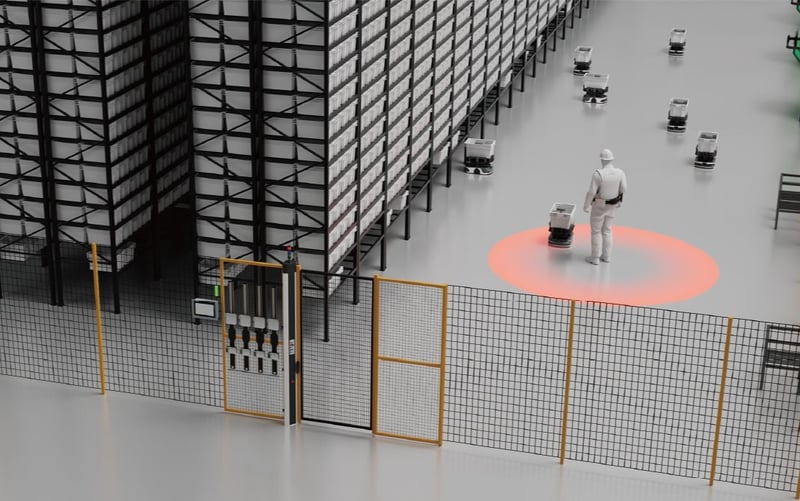
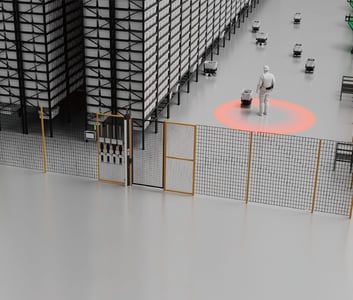
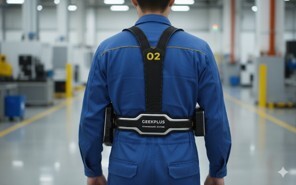
RoboSafe is designed for warehouse scenarios where people and robots need to work closer together, such as maintenance and controlled access inside automated areas. It extends the core Geek+ safety architecture to support safer human–robot interaction in shared work zones.

Geekplus robosafe human robot interaction safety Geekplus robosafe human robot interaction safety

How RoboSafe works


RoboSafe allows robots to operate safely when authorized personnel enter shared or restricted areas.

  • Authorized operators interact with the system through a human–machine interface (HMI)

  • Operator presence is detected and verified before access is allowed

  • Robots adjust behavior based on predefined safety rules and proximity conditions

  • Safety actions are applied only within the affected zone to avoid unnecessary system-wide stops

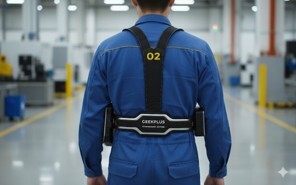
Geekplus safety belt Geekplus safety belt


Where RoboSafe is used

RoboSafe is not intended for normal production picking operations but applied in controlled scenarios such as:


device-electronic-machine-4-svgrepo-com (1)

Maintenance and inspection inside automated areas

device-electronic-machine-13-svgrepo-com (1) 

Troubleshooting and recovery tasks

device-electronic-machine-9-svgrepo-com

Temporary human access within robot operating zones

Geek+ Systems Compatibility

RoboSafe integrates with all Geek+ robot systems and safety architecture, working alongside physical protection measures such as fencing, safety doors, and zone control and coordinates with safety PLC logic, access control, and emergency stop functions  RoboSafe does not replace system safety. It operates within it.


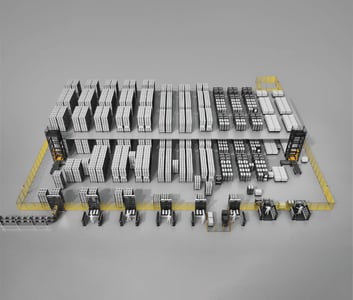
Shelf-to-Person Scenario 3

Shelf-to-Person

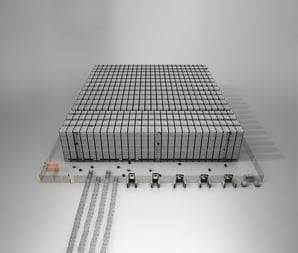
Tote-to-Person Scenario 1

Tote-to-Person

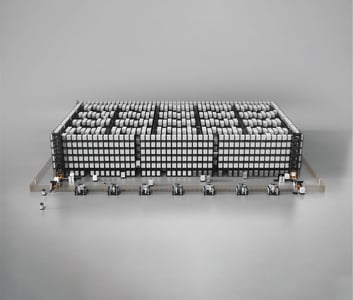
Pallet-to-Person Scenario1

Pallet-to-Person

RoboSafe Scenario

All Geek+ Systems

RoboSafe Components

RoboSafe is not intended for normal production picking operations but applied in controlled scenarios such as:


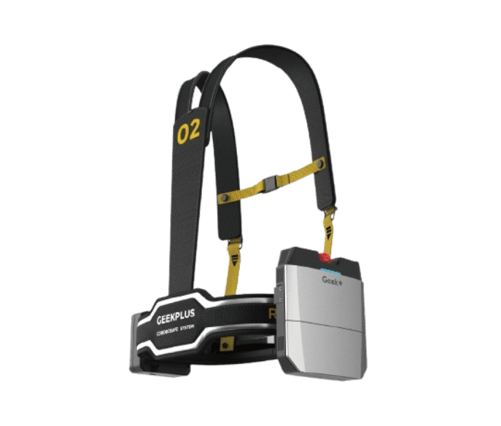
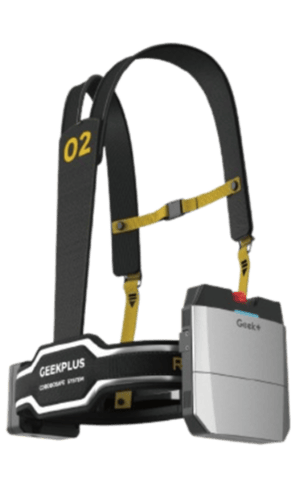
Geekplus Safety Belt

Safety Belt

  • Wearable device

  • Provides human-robot interaction (HMI) range

  • Real-time connectivity to SafeCore 

P40_V2.0_高位收起渲染文件.583 1 
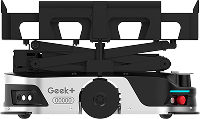
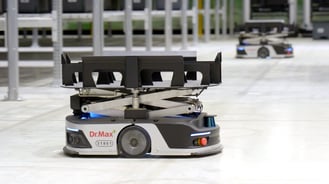
Robots with interactive module

  • Decelerates to 0.3 m/s near operators

  • Stops instantly at close range


Picture8

SafeCore

  • Central safety controller managing all on-site Safety Belts and robot interaction modules

  • Triggers system-wide emergency stops in critical situations
Safety Door Pro Geekplus


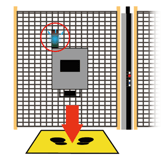
SafetyDoor Pro

  • Upgraded safety door device package

  • Safety doors unlock only when the operator’s Safety Belt is detected and functioning properly
Geekplus safety belt-1


RMS


RMS

  • Real-time visibility of on-site Safety Belt status

  • Live map view showing robot stop zones around operators


Safety Door & other units

During leaning or anomaly handling operations, an interlocking guard with guard locking controlled by a safety PLC is utilised to ensure the safe entry and exit of personnel in the robotic area.

Safety Belt
Geekplus Safety Belt
Robots with Interactive Module
3- Dr Max - RS-1
Safety Lock
051a9f01-000b-4008-a9c8-dcc70408714f-1
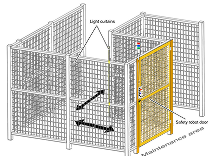
Light Curtain & Fence
image 109
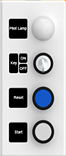
Button Box
image 107

Why RoboSafe


Range icon.svg

Real-time operator awareness

Continuously monitors operator proximity and visualizes safety zones live in the system

security evasion icon.svg 

Adaptive safety zones

Automatically adjusts slow-down and stop zones based on distance, layout, and robot density


dual channel icon.svg

Instant emergency stop

One-touch emergency stop instantly halts nearby robots and linked equipment

fault safety mode-1

Fail-safe operation

If communication or hardware issues occur, robots enter a safe stop state automatically

Want to see how this applies to your site?

Talk to our safety and solutions team.

FAQs

What is the Geekplus System Safety Solution? +

The Geekplus safety solution provides a secure, end-to-end operational environment for all warehouse and manufacturing scenarios.
It covers:

  • Electrical safety

  • Mechanical safety

  • Functional safety

  • Information security

The framework reduces personnel risk, increases system reliability, and enables flexible deployment across diverse facilities.

Is the Geekplus safety solution certified? +

Yes. The complete safety solution has been certified by TÜV Rheinland and meets:

  • Functional safety level up to PL d

  • Global regulatory standards for electrical, mechanical, and system safety

Geekplus maintains a dedicated team for safety R&D, safety implementation, and safety verification to ensure compliant and safe operations in every project.

What safety considerations are applied during human–robot interaction? +

Geekplus safety design spans the entire human-robot interaction lifecycle, including:

  • Mechanical safeguards

  • Electrical protection systems

  • Functional safety architecture

  • Access management and detection

  • Emergency response measures

What is Mechanical Safety in the Geekplus system? +

Mechanical safety measures ensure safe physical interaction and prevent unintended contact or collisions.
This includes:

  • Protective structures (fences, guards)

  • Controlled access points

  • Design standards limiting mechanical hazards

What is Electrical Safety in the Geekplus system? +

Electrical safety covers all electrical components within the robot and system architecture.
Measures include:

  • Overcurrent and overload protection

  • Proper grounding

  • Insulation and wiring safeguards

  • Compliance with international electrical safety standards

What does Functional Safety include? +

Functional safety ensures the system behaves safely even in fault conditions.
Key mechanisms include:

  • Separate robot area and maintenance area

  • Interlocked safety door control circuits

  • Emergency stop buttons connected to the entire system

  • Safety PLC integration

  • Light curtains and intrusion detection for safe picking/put-away

What software powers the robotic sorting system? +

During picking or put-away operations, the system uses:

  • Safety light curtains for intrusion detection

  • Automatic stopping zones when personnel enter

  • Controlled restart mechanisms to avoid accidental robot movement

These measures ensure safe human-robot collaboration.

How does the system protect personnel in maintenance areas? +

Maintenance areas incorporate:

  • Interlocking guards with lock mechanisms

  • Safety PLC-controlled door locking

  • Clear separation from robot operation zones

  • Safe entry/exit procedures

These prevent accidental robot movement while personnel are inside.

What safety infrastructure can be deployed (e.g., fencing systems)? +

Facilities can use a customized Safety Fence System, which may include:

  • Guarded entry points

  • Interlocked doors

  • Safety scanners

  • Controlled access zones for human intervention

View All