


Key takeaways
- In pharma distribution, accuracy is a requirement, and it must hold when respiratory season and year-end volume rise.
- Most errors come from look-alike products, lot and expiry mix, manual confirmation, audit trail gaps and rushed replenishment.
- Goods-to-person automation with WMS/WCS integration can direct picks to specific lots, enforce expiry rules and record every movement.
- Automation supports accuracy but does not replace validation, SOPs or the quality and compliance team.
Why do volume spikes put pharma accuracy at risk?
Volume spikes put accuracy at risk because time per pick shrinks, replenishment runs closer to its limits and less experienced staff may join the floor. Each of these raises the chance of an error and makes traceability harder.
A wrong product, lot or quantity can reach a pharmacy or hospital and affect patients, so the accuracy standard does not relax during busy periods.
"Peak volume doesn't create the need for accuracy. It exposes where a process still depends on human interpretation. In pharma, where product identification and traceability can extend to the individual package, those manual decisions become harder to manage as throughput rises. The goal is to move those decisions into the system: directing the operator to the right product and location, enforcing inventory logic, and confirming each step digitally. That allows throughput to increase without sacrificing the accuracy, control and traceability pharmaceutical operations require."
Simon Szeto, Senior Manager - Solutions, Geek+ Americas
Where do picking errors in pharma distribution come from?
Picking errors in pharma distribution usually come from five sources: look-alike products, lot and expiry mix, manual confirmation steps, gaps in the audit trail and rushed replenishment.
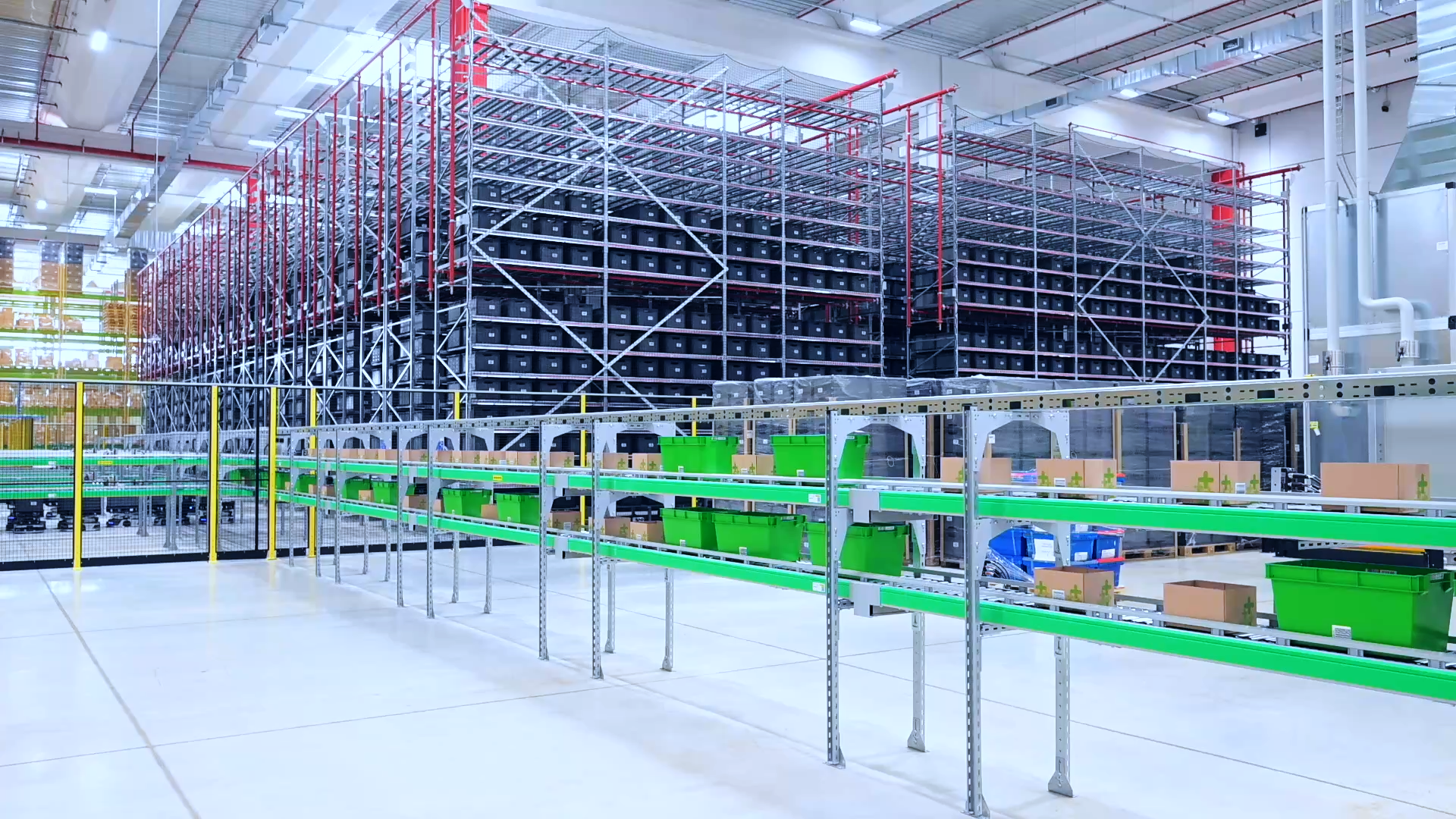
Automated storage and conveyor lines reduce the manual handling steps where picking errors tend to start.
- Look-alike products: similar packaging and names across strengths or pack sizes.
- Lot and expiry mix: several lots of the same SKU, with first-expiry-first-out rules to follow.
- Manual confirmation: checks that rely on reading labels correctly under time pressure.
- Audit trail gaps: incomplete records or records kept outside the system.
- Rushed replenishment: stock moved into pick locations without full verification.
How does automation improve accuracy and traceability in pharma?
Automation improves accuracy and traceability by bringing the correct storage location to the operator and, through WMS/WCS integration, directing each pick to a specific lot, enforcing expiry rules and recording every movement.
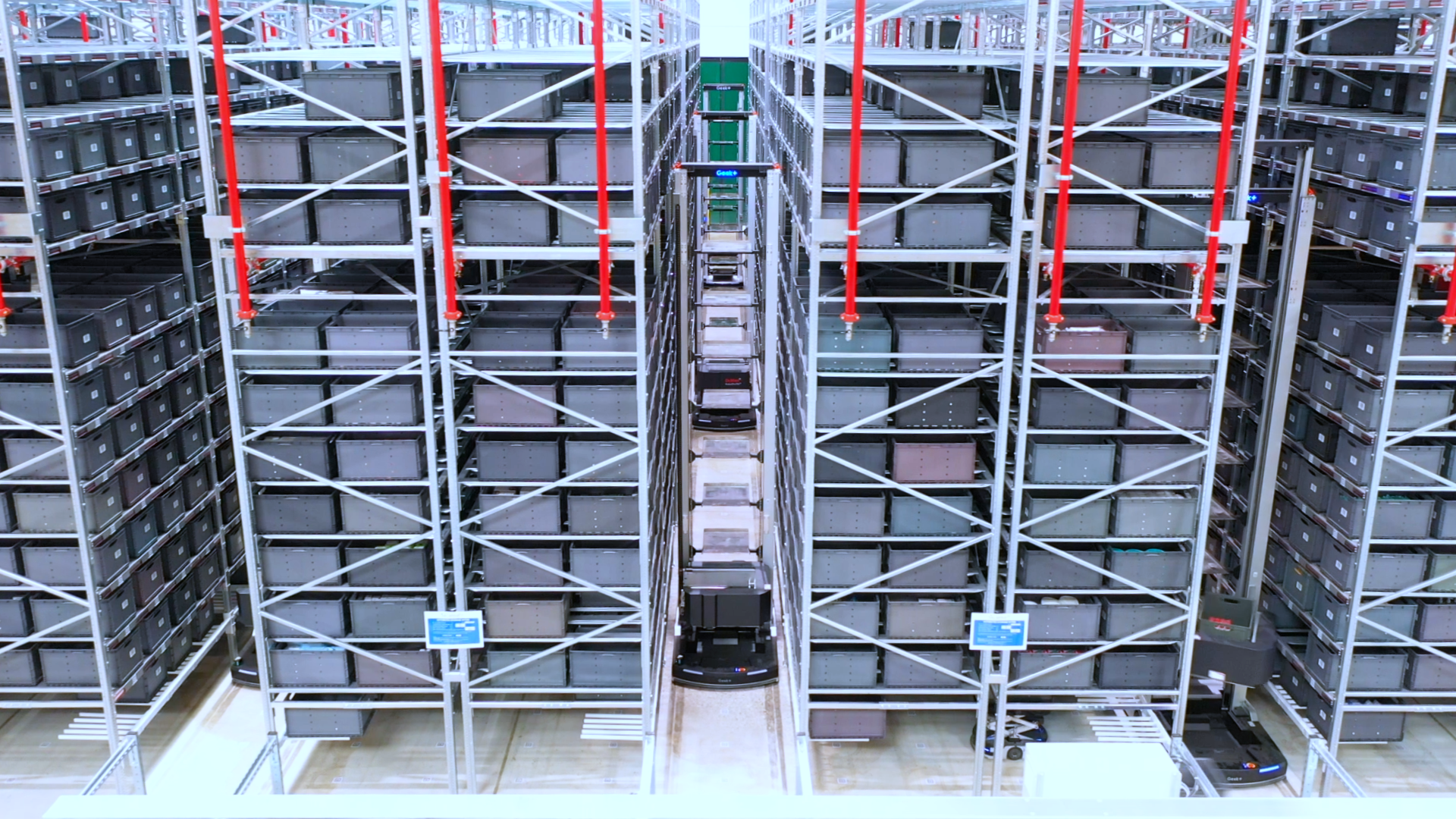
RoboShuttle robots retrieve totes from dense storage and bring them to the pick station, so operators no longer search the aisles.
Geek+ RoboShuttle goods-to-person systems remove the need to search for items in the aisles. With system-directed picking and lot-level tracking, the operation keeps a complete record of what was picked, from which lot and when, which supports audit readiness.
What does automation not replace in a regulated environment?
Automation does not replace system validation, standard operating procedures or the quality and compliance team. Any system in a regulated environment must be validated against that operation's own requirements before going live.
What should a pharma team ask before automating?
Before automating, a pharma team should understand where errors occur today, how lot and expiry rules are enforced, how complete the audit trail is, how a new system would be validated and how it would integrate with the existing WMS.
Want to understand where automation could support accuracy in your operation?
Request a free automation assessment for your pharma distribution operation. If automation is not the right fit, we will tell you.


