

Key takeaways
- Holiday peak in grocery and retail rarely creates new problems; it exposes existing ones in slotting, replenishment and accuracy.
- Store delivery windows stay fixed while volume and product mix change, so delays upstream compress picking time.
- The most useful post-peak metrics are on-time store deliveries, short picks, pick rates by zone and empty forward locations.
- Dense goods-to-person storage helps keep a wide ambient range close to the pick station, but fresh and frozen zones need their own approach.
Why is holiday peak so hard on grocery and retail distribution centers?
Holiday peak is hard because volume rises and the product mix shifts toward seasonal items while stores still expect deliveries on the same schedule. A missed truck means empty shelves on the days that matter most.
The period between Thanksgiving and New Year compresses a large share of seasonal demand into a few weeks. Distribution centers that support both stores and online orders feel this from two directions at once.
"Holiday peak doesn't break a grocery DC. It finds the cracks that were already there. The trucks leave on time whether you're ready or not, and when a store shelf sits empty the week before holidays, nobody remembers it started as a slotting problem."
Michael Sahler, Head of Business Development, Geek+ Americas
What problems does holiday peak expose in store replenishment?
Holiday peak usually exposes five problems: seasonal SKUs crowding prime locations, fixed store delivery windows, competing case and each picking, accuracy slipping under pressure and replenishment that cannot keep pace with fast movers.
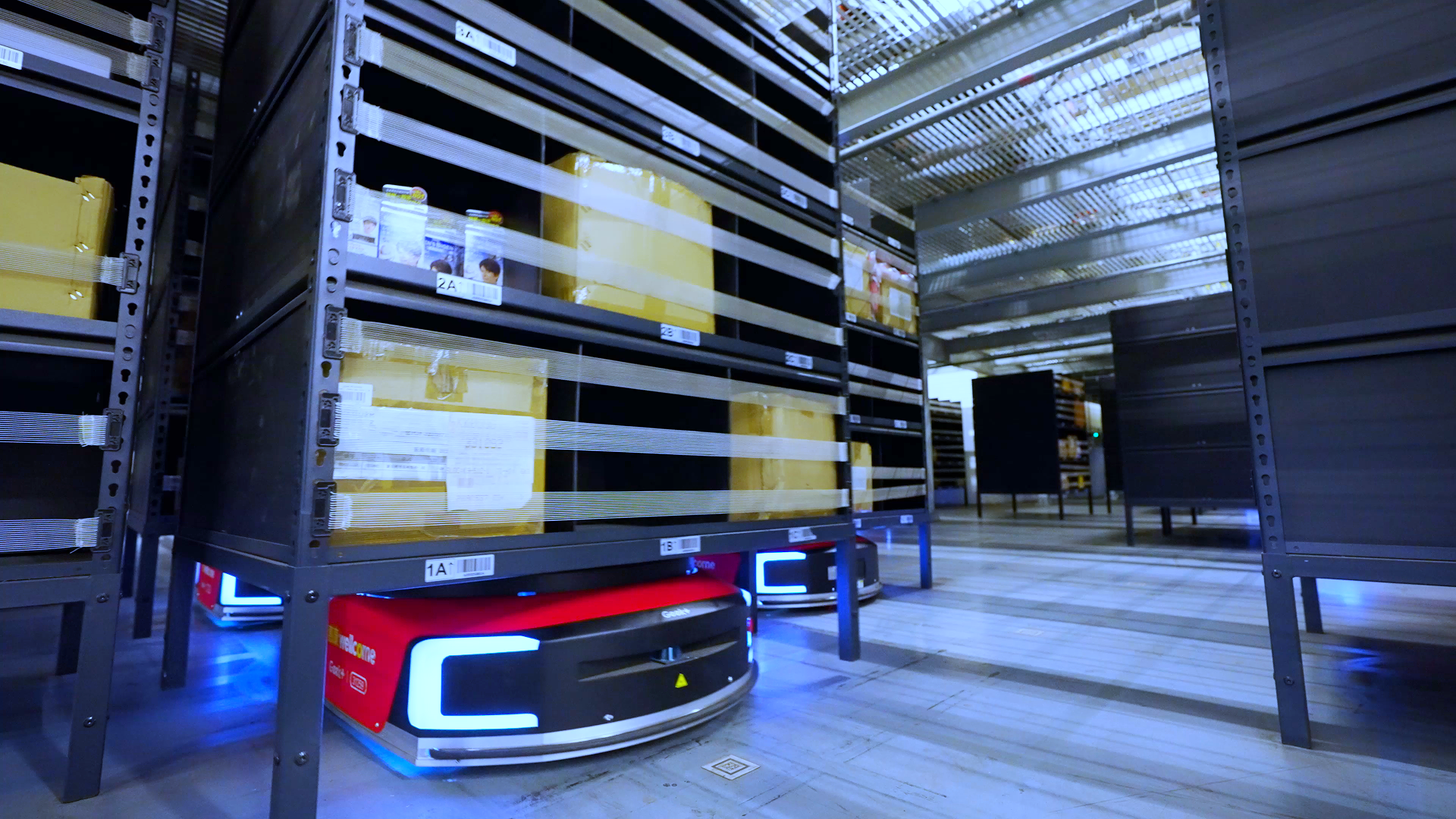
Goods-to-person robots bring shelving to the pick station, so fast movers stay within reach when demand shifts.
- Seasonal SKUs crowd prime pick locations. If slotting does not change with demand, pickers travel further for the products that matter most.
- Store delivery windows do not move. Departure times stay fixed, so any delay compresses the time left for picking and loading.
- Case and each picking compete. Store replenishment and online orders often draw from the same inventory with different picking methods.
- Accuracy slips under pressure. Short picks and substitutions rise when teams rush.
- Replenishment falls behind fast movers. When forward locations empty faster than they are refilled, picking stalls.
What should grocery and retail DCs measure after peak?
After peak, grocery and retail DCs should measure on-time store deliveries, short picks and substitutions, pick rates by zone, how often forward locations ran empty and which SKUs outpaced forecast.
- On-time store deliveries by route and by week
- Short picks and substitutions by category
- Pick rates by zone in the busiest week compared with a normal week
- Frequency of empty forward pick locations
- SKUs that moved faster than forecast, and where they were stored
Where does automation help in grocery and retail distribution?
Automation helps most in ambient categories with high SKU counts, where dense goods-to-person storage can keep a wide product range close to the pick station and bring fast movers to the operator.
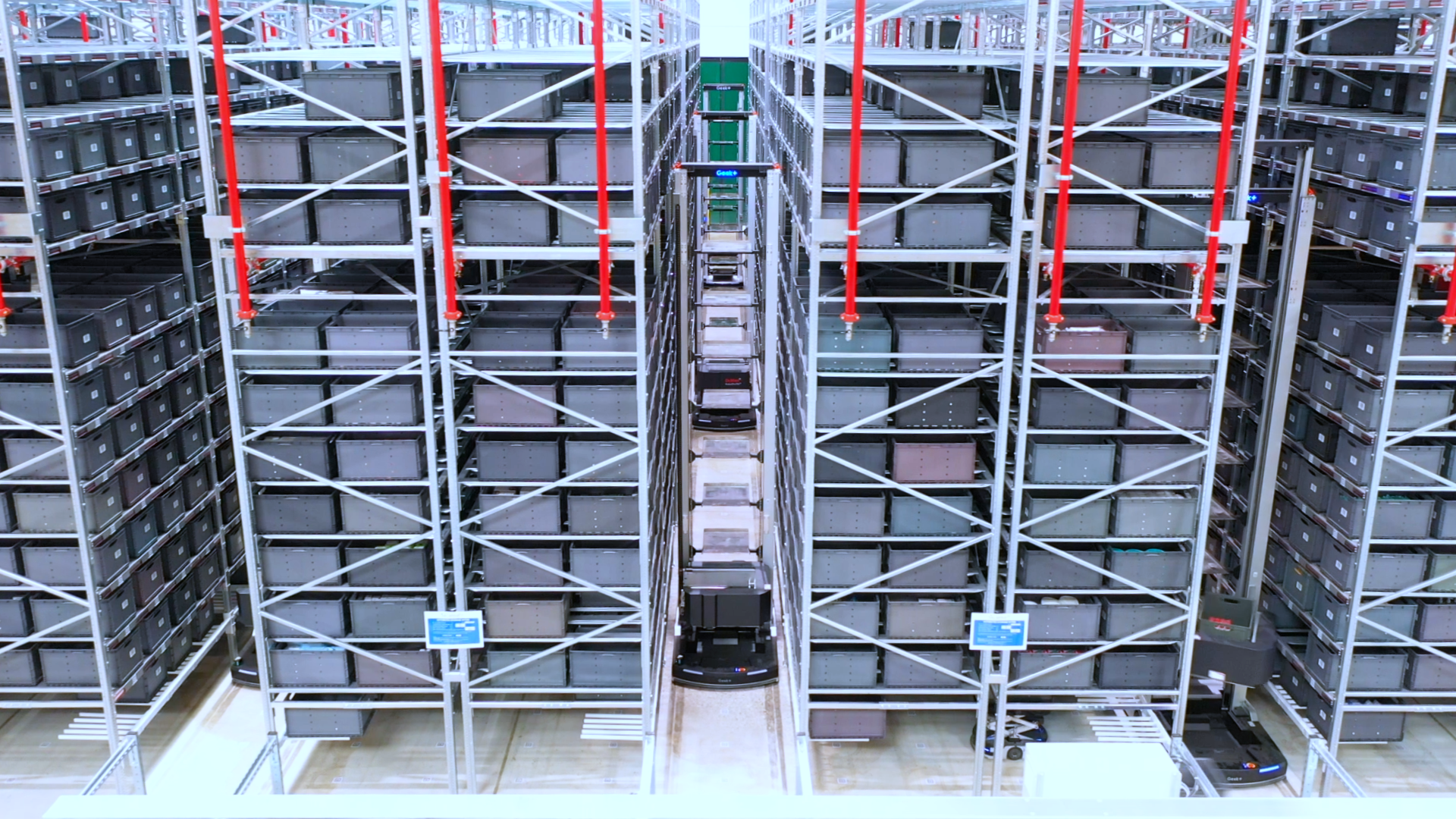
RoboShuttle robots retrieve totes from dense storage, keeping a wide ambient range close to the pick station.
Geek+ RoboShuttle and PopPick systems store inventory densely and deliver totes or bins to workstations, which reduces travel and helps software rebalance work as demand changes. Fresh and frozen categories have temperature and handling requirements of their own, so the right solution often differs by zone.
What is the first step before automating a grocery DC?
The first step is understanding your own flow: which categories, stores and processes were stretched during peak, and why. That analysis should come before any decision about equipment.
Want a second opinion on your operation?
Request a free automation assessment for your grocery or retail DC. If automation is not the right fit, we will tell you.